
Editor's Picks: The 6 Grass Seeds We'd Actually Plant
Every product in our catalog earned its spot. But some grass seeds stick with you differently — the ones that made us rethink what a lawn could be, or solved a problem we did not know had a solution. These are those six.
This is not a rankings list. It is not based on sales data or advertising partnerships (we do not have any). These are the grass seeds our editors would put on a real buying shortlist for a serious lawn renovation if they were starting from bare dirt tomorrow.
Why These Six
We review 64 seed and lawn-care products across the full spectrum — cool-season, warm-season, transition-zone, shade blends, native grasses, and establishment helpers. We read the NTEP data, follow the forum threads, and check catalog claims against extension guidance, published trial notes, and owner reports. Most products are good. Some are great. A handful changed how we think about lawns.
These six picks span the entire climate map: a premium cool-season KBG for the perfectionist, a native prairie grass for the iconoclast, the internet's most beloved blend, a genuine breeding breakthrough, a warm-season carpet you can grow from seed, and a cold-climate survivor for places other grasses quit. Every pick is personal. Every pick has a story.
| # | Pick | Why | Climate |
|---|---|---|---|
| 1 | Outsidepride Midnight Kentucky Bluegrass | The One | cool season |
| 2 | Sharp's Improved II Buffalo Grass | The Underdog | warm season |
| 3 | Jonathan Green Black Beauty Ultra | The Forum Favorite | cool season |
| 4 | Barenbrug RTF Water Saver | The Innovator | cool season |
| 5 | Pennington Zenith Zoysia Grass Seed & Mulch | The Patient One | warm season |
| 6 | Outsidepride Combat Extreme Northern Zone | The Survivor | cool season |
Pro Tip
Every product link on this page goes to the same retailers we link throughout the site — Amazon, primarily. We earn a small commission if you buy through our links. That does not influence which products appear on this list. Our full affiliate disclosure is at the top of this page.
Outsidepride Midnight Kentucky Bluegrass
If we could only plant one grass seed for the rest of our lives, this is it.
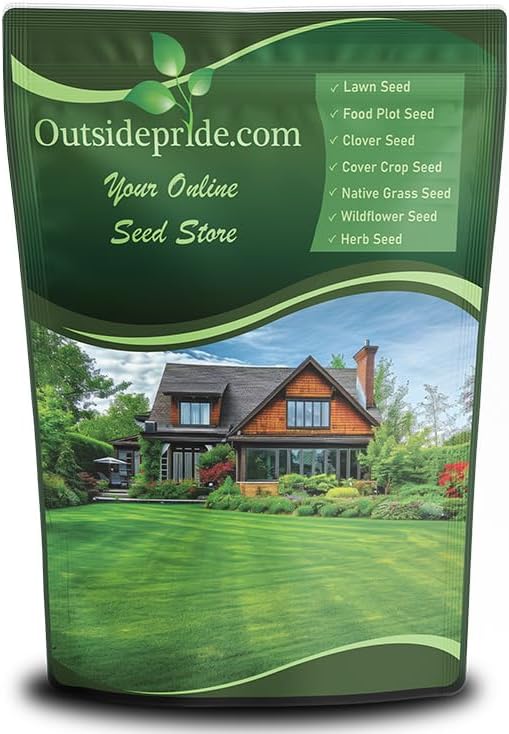
Outsidepride
Serious full-sun Kentucky bluegrass shoppers who want the named Midnight cultivar and are willing to verify local NTEP/extension fit and current seed-tag details.
Type
cool season
Zones
3-7
Germination
21-28
Sun
full sun
There are grass seeds that test well, grass seeds that photograph well, and grass seeds that sell well. Midnight Kentucky Bluegrass does all three — but what sets it apart is something harder to quantify: it makes you feel something when you look at your lawn. That deep blue-green color, almost too dark to believe, hits different when the late afternoon sun catches it. It looks like the outfield at a professional ballpark, and that is not an accident — NTEP trial data consistently ranks Midnight among the top cultivars for color density.
We have planted a lot of grass seed. Dozens of varieties across multiple states, seasons, and soil types. When the bag of Midnight KBG goes down, there is a distinct moment — usually around day 18 to 21 — when the first blades push through and you realize the color is genuinely different from anything else in your yard. Not brighter. Not lighter. Deeper. Like someone turned the saturation up on reality.
The rhizome network is the other reason Midnight earns the top spot. Unlike tall fescue varieties that stay in clumps, KBG spreads underground. Give it two seasons and bare spots start filling themselves in. Dog damage? Gone by midsummer. Foot traffic wear from the kids? The rhizomes creep in from the edges and close the gap. This self-repair ability is not a marketing claim — it is the fundamental biology of Kentucky bluegrass, and Midnight does it better than most because its rhizome production is rated above average even among KBG cultivars.
The catch? Patience. Midnight KBG takes 14 to 21 days to germinate under ideal conditions, and 28+ days is not uncommon if soil temps are below 60 degrees F. Full establishment takes a solid growing season. If you need instant results, this is the wrong seed. But if you are willing to invest the time and play the long game, Midnight rewards you with a lawn that gets better every single year. Three years in, you will not believe it is the same yard.
Why We Chose It
Nothing else in the catalog produces this color and self-repair combination. It is the seed we reach for when the lawn matters.
Ideal For
Patient homeowners in zones 3-7 who want a lawn that looks professionally maintained without a professional.
Sleeper Tip
Pre-germinate Midnight KBG using the bubble method to cut that 21-day wait down to 5-7 days. It transforms the experience.
Sharp's Improved II Buffalo Grass
A native Great Plains grass that survives on neglect. The most honest grass seed we sell.
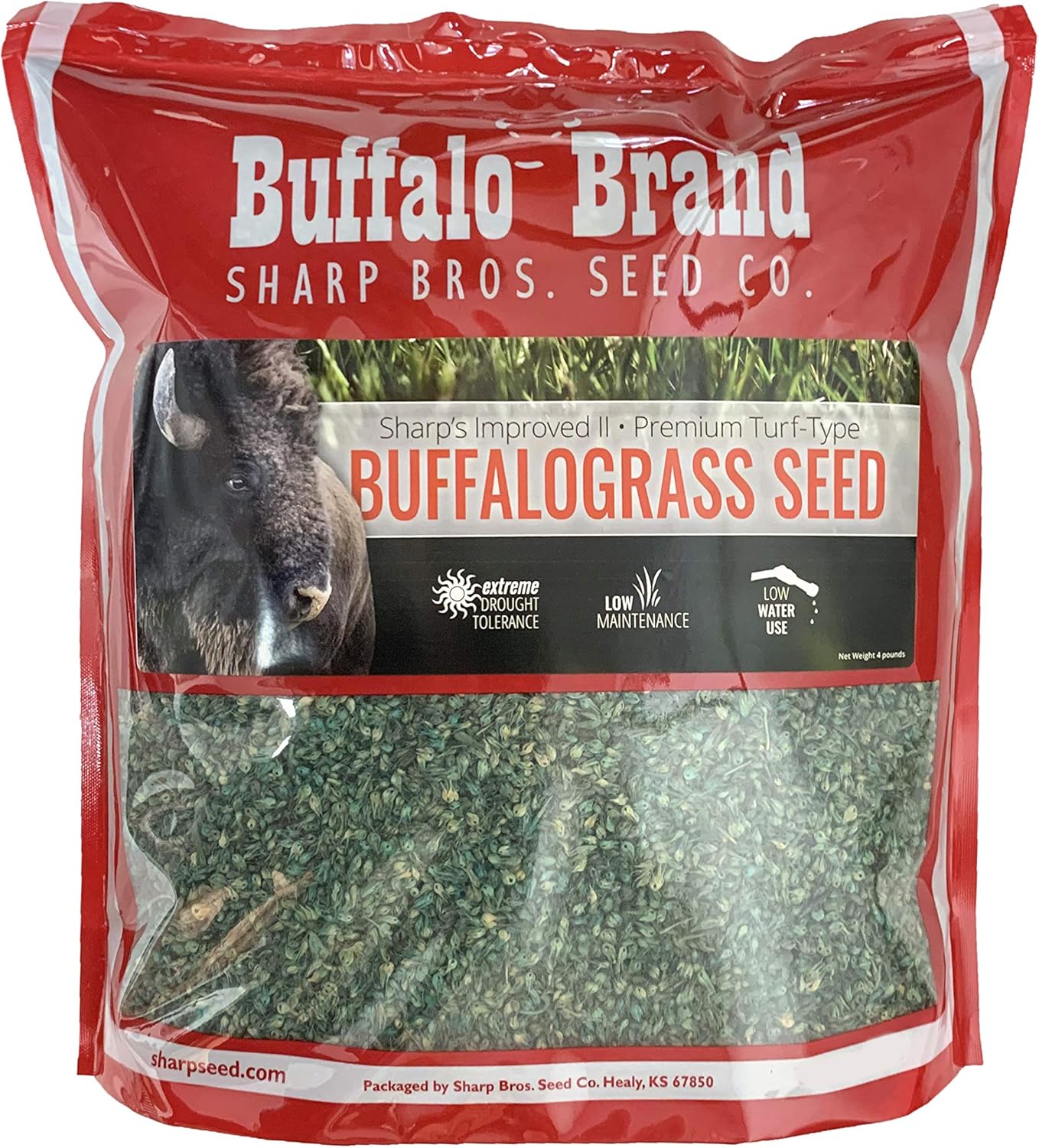
Sharp Bros. Seed Co.
Homeowners in the Great Plains and semi-arid West who want a native, ultra-low-water lawn that stays green with minimal intervention.
Type
warm season
Zones
5-8
Germination
14-30
Sun
full sun
Here is the thing nobody in the lawn care industry wants to say out loud: most Americans are overwatering, overfertilizing, and overcomplicating their lawns. We pour billions of gallons of treated drinking water onto turf that was never meant to grow where we planted it. We dump synthetic nitrogen onto soil that does not need it. We mow twice a week when the grass would be healthier mowed every ten days. Buffalo grass is the antidote to all of that, and it is not a compromise — it is a fundamentally different philosophy.
Sharp's Improved II is the best buffalo grass available from seed (most premium cultivars are sod-only). It is a genuine native prairie grass, evolved over thousands of years on the Great Plains to survive on 15 to 20 inches of annual rainfall — roughly what Denver, Amarillo, or Billings gets without supplemental irrigation. In those climates, buffalo grass is not just viable; it is the ecologically correct choice. Every other lawn grass you could plant there is an import, dependent on infrastructure that may not always be there.
The aesthetic is different, and that is where buffalo grass polarizes people. It grows to about 4 to 6 inches if left unmowed, forming a soft, curving carpet with a blue-green to sage color that looks like a miniature prairie. Mowed at 3 inches, it resembles a slightly wider-bladed lawn with a distinct Western character. It does not look like a suburban Kentucky bluegrass lawn, and it never will. If that matters to you, this is the wrong grass. If you think a lawn should look like the landscape it sits in, buffalo grass is quietly stunning.
The establishment period is where most people bail. Buffalo grass germinates in 14 to 21 days, but full coverage takes 3 to 5 months because it spreads via stolons — above-ground runners that creep across bare soil at a leisurely pace. Those first few months look rough. Patchy, uneven, weedy. Your neighbors will give you looks. But by the second summer, the stolon network knits together into a dense mat that chokes out weeds naturally, tolerates foot traffic, and looks better every year with essentially zero input. No fertilizer (seriously — it hurts the plant). Minimal water. Mow it or do not.
Why We Chose It
Because it challenges every assumption about what a lawn should be. It is the most interesting grass seed in our catalog, and in the right climate, it is the smartest choice by a wide margin.
Ideal For
Homeowners in the Great Plains and high desert (zones 5-8, under 25 inches of annual rainfall) who want a lawn without the water bill.
Sleeper Tip
Buffalo grass lawns are pollinator-friendly when left unmowed — the seed heads attract native bees and butterflies. Your "lazy" mowing schedule is actually an ecological contribution.
Jonathan Green Black Beauty Ultra
The most recommended grass seed on the internet. Ten thousand lawn nerds can't be wrong.
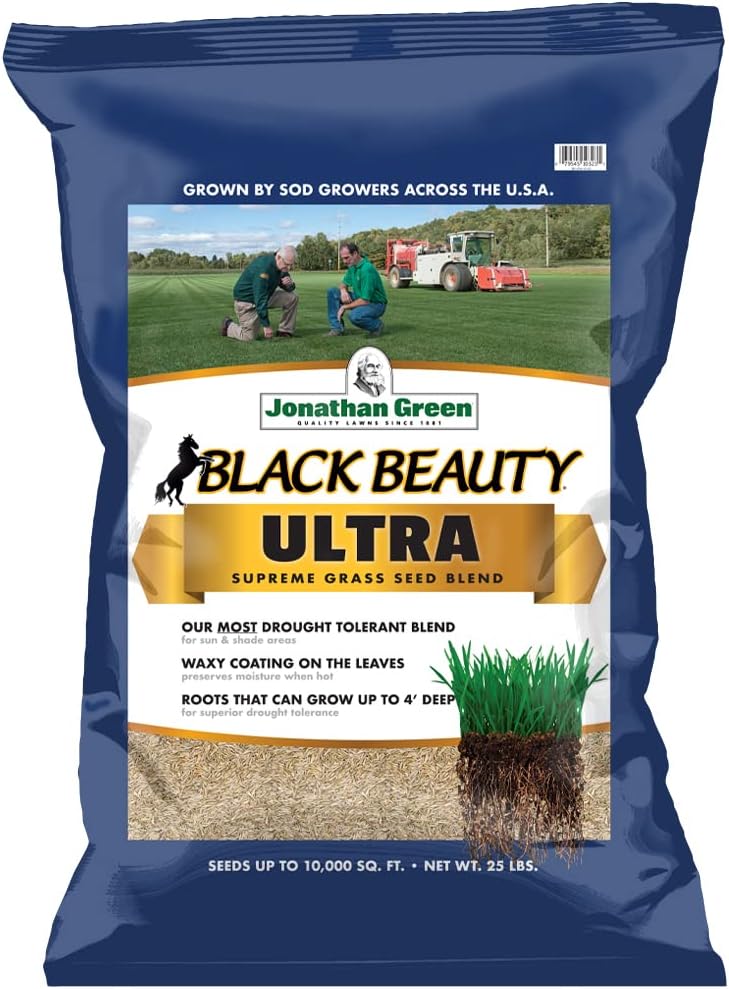
Jonathan Green
Lawn enthusiasts who want a premium cool-season tall-fescue-led blend with manufacturer-stated 80/10/10 composition and are willing to verify the current seed tag for cultivar details.
Type
cool season
Zones
3-7
Germination
7-14
Sun
partial shade
If you spend time in The Lawn Forum overseeding threads, Reddit's r/lawncare renovation posts, or the old GardenWeb/Houzz lawn archives, you will encounter Black Beauty Ultra quickly. It is one of the recurring cool-season seed recommendations in the enthusiast community, and that reputation was not bought through advertising. Jonathan Green does not run Super Bowl commercials or sponsor NASCAR. Black Beauty Ultra earned its status one lawn at a time, through word of mouth from people who actually grow grass.
The formula is elegant: 80% elite turf-type tall fescue, 10% Kentucky bluegrass, 10% perennial ryegrass. Each component has a job. The tall fescue does the heavy lifting — deep roots (up to 4 feet), heat tolerance, drought resilience, and that waxy leaf coating that makes the blades almost hydrophobic. The KBG provides rhizome spread for self-repair. The ryegrass germinates in 5 to 7 days, giving you visible green while the fescue and KBG take their time. It is a blend that accounts for its own weaknesses.
What separates Black Beauty Ultra from a generic "tall fescue blend" is the cultivar selection. Jonathan Green has been in the seed business since 1881 — not a typo, since Chester Arthur was president — and they source specific named cultivars that perform in NTEP trials, not commodity seed that passes minimum germination standards. The difference shows. Side by side with a big-box tall fescue blend, BBU is visibly darker, denser, and finer-textured. It looks like it costs more because the seed inside the bag actually is more.
The only knock is price. At roughly 2 to 3 times the cost of Scotts or Pennington per pound, Black Beauty Ultra is a premium product. But here is the math: a 25-pound bag covers about 5,000 square feet for overseeding. For a typical suburban lawn, that is $80 to $100 worth of seed. You will spend more than that on fertilizer this year, and fertilizer does not fundamentally change the genetics of your lawn. Premium seed does. It is the single highest-leverage investment in lawn care, and BBU is the one the people who actually care about lawns keep buying.
Why We Chose It
Because the community has spoken, repeatedly, for years. When the people who obsess over lawn care all converge on the same product, we pay attention.
Ideal For
Cool-season homeowners (zones 3-7) who want a proven, community-validated seed blend that handles sun, partial shade, heat, and traffic without overthinking the purchase.
Sleeper Tip
BBU's waxy leaf coating makes it genuinely more resistant to fungal disease. You will spend less on fungicide applications than with standard fescue blends.
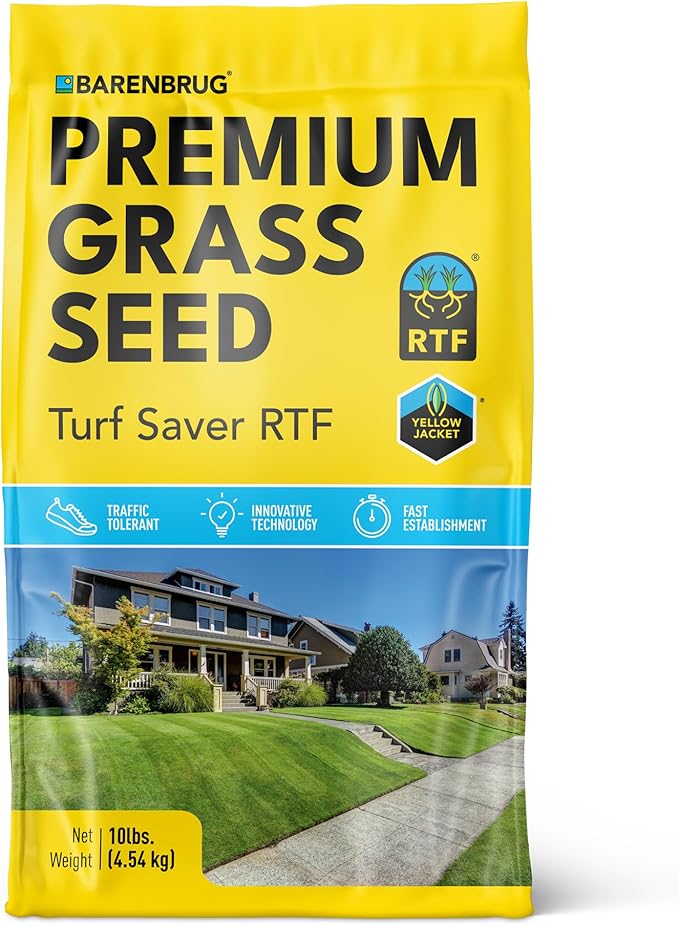
Barenbrug RTF Water Saver
The only tall fescue that self-repairs. A genuine breakthrough, not a marketing gimmick.
Barenbrug
Lawn enthusiasts comparing premium tall fescue/RTF products who want Barenbrug's Water Saver positioning and will verify the current seed tag and buying-link variant.
Type
cool season
Zones
4-7
Germination
10-14
Sun
partial shade
Tall fescue has one critical flaw: it is a bunch-type grass. It grows in clumps. When a patch dies — from dog urine, foot traffic, grub damage, drought stress — it stays dead. Unlike Kentucky bluegrass, which sends underground rhizomes to colonize bare soil, tall fescue just sits there, waiting for you to reseed. This fundamental limitation has kept tall fescue in second place behind KBG for decades, despite fescue's superior heat tolerance, deeper roots, and lower water requirements.
Barenbrug's RTF (Rhizomatous Tall Fescue) changes the equation. Through conventional breeding — no genetic modification — Barenbrug developed a tall fescue that produces underground rhizomes. The implications are significant: you get tall fescue's drought tolerance, deep root system, and heat resilience, plus KBG's self-repair ability. On paper, it sounds like marketing hyperbole. In practice, it works. Not as aggressively as pure KBG — the rhizome production is moderate, not explosive — but enough that bare spots measurably shrink over time without reseeding.
The "Water Saver" part of the name is not just branding. RTF's root system extends up to 4 feet deep, accessing moisture reserves that shallow-rooted grasses cannot reach. Independent testing at multiple universities has shown RTF maintaining green color with 30 to 50 percent less irrigation than standard tall fescue. In water-restricted regions — the Mountain West, parts of the Pacific Northwest, California's transition zone — that is not a nice-to-have; it is the difference between keeping your lawn and losing it.
The honest downside: RTF is expensive. At roughly $5 to $6 per pound, it is the most expensive grass seed in its class. And the self-repair takes time to kick in — you will not see rhizome spreading in year one. By year two, you will notice bare spots filling in more quickly. By year three, the lawn has a resilience that standard fescue lawns simply cannot match. Like most things worth having, RTF rewards patience.
Why We Chose It
Because genuine innovation in grass seed is rare. Most "new" products are repackaged commodity seed with better marketing. RTF is the real thing — a breeding breakthrough that solves a real problem.
Ideal For
Homeowners in zones 4-7 who love tall fescue but are tired of reseeding bare spots every fall, or anyone in a water-restricted area who needs a resilient cool-season lawn.
Sleeper Tip
Mix RTF at 80/20 with Midnight KBG and you get arguably the ultimate cool-season lawn blend: self-repairing fescue for structure plus KBG for color and aggressive fill-in.
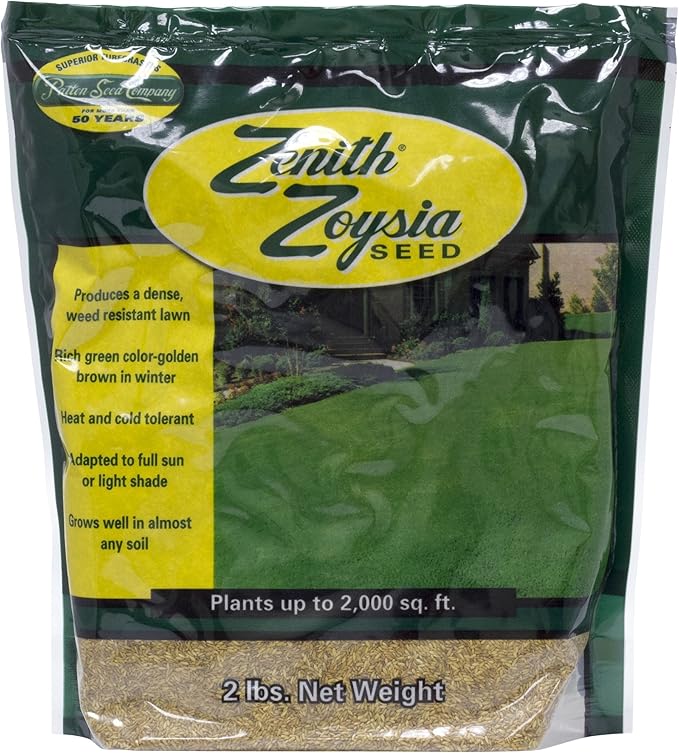
Pennington Zenith Zoysia Grass Seed & Mulch
A warm-season carpet that feels like walking on a putting green. If you can wait for it.
Pennington
Patient homeowners in zones 6-9 who want the premium feel of Zoysia turf without the cost of sod installation.
Type
warm season
Zones
6-9
Germination
30
Sun
partial shade
Zoysia is the grass that every warm-season homeowner wants but almost nobody plants from seed — because almost every Zoysia variety is only available as sod or plugs, which costs $1 to $3 per square foot installed. Pennington Zenith changed that calculation. It is one of the very few Zoysia cultivars that can be reliably established from seed, and it produces the dense, carpet-like turf that makes Zoysia lawns the envy of entire neighborhoods.
The texture is the first thing you notice. Zenith Zoysia produces a tight, interlocking turf mat with fine to medium blades that feels soft underfoot. Walking on an established Zoysia lawn barefoot is a distinctly different experience from walking on bermuda or tall fescue — it is cushioned, dense, almost spongy. This density is also what makes Zoysia a natural weed suppressor. Once established, Zoysia turf is so thick that weed seeds cannot reach the soil surface. You will spend dramatically less on herbicides compared to bermuda lawns.
Zenith also handles moderate shade better than any other warm-season grass except St. Augustine (which is not available from seed). Four hours of direct sun is enough for Zoysia, where bermuda wants six or more. For warm-season homeowners with mature trees casting afternoon shade, Zenith fills a niche that nothing else from seed can touch. Add in cold tolerance down to zone 6 — remarkable for a warm-season grass — and Zenith extends the Zoysia option to transition zone homeowners who thought they were stuck choosing between bermuda and fescue.
The catch is establishment speed, and we will not sugarcoat it: Zenith Zoysia from seed is a test of patience. Germination takes 14 to 21 days under ideal conditions (soil temps of 65 to 70 degrees F, consistent moisture). Full coverage takes an entire growing season — sometimes two. The included mulch coating helps, but you are looking at 12 to 16 weeks from seeding to a lawn that looks like a lawn. Many people abandon Zoysia halfway through because they expect bermuda-speed results from a grass that operates on its own timeline. If you can commit to the wait, the result is a lawn that gets better every year for a decade.
Why We Chose It
Because it makes seed-grown Zoysia possible for regular homeowners. The warm-season market needed a quality seed option, and Zenith delivers — for those patient enough to let it.
Ideal For
Warm-season homeowners in zones 6-10 who want Zoysia's carpet-like density without the $5,000+ cost of sod installation, and who can commit to a full season of establishment.
Sleeper Tip
Zoysia's density makes it almost impervious to crabgrass by year three. You may be able to skip pre-emergent herbicide entirely once the lawn fills in — something bermuda lawns will never achieve.
Outsidepride Combat Extreme Northern Zone
Built for the places other grass seeds quit. Zone 3 rated and genuinely cold-hardy.
Outsidepride
Cool-season homeowners comparing a fescue/KBG stress blend, especially where local extension guidance supports tall fescue and Kentucky bluegrass for the site.
Type
cool season
Zones
3-7
Germination
10-14
Sun
shade tolerant
If you live somewhere that hits negative 20 degrees F in January and then bakes at 95 degrees in July — Minnesota, Wisconsin, Maine, Montana, the upper Great Plains — your grass seed selection just got dramatically smaller. Most premium blends are optimized for zones 5 to 7, the comfortable middle of the hardiness map. Combat Extreme was specifically formulated for zones 3 to 7, and it is one of very few blends that takes cold hardiness seriously enough to make it the primary design criterion.
The blend is a calculated multi-species approach: turf-type tall fescue for heat tolerance and deep roots, Kentucky bluegrass for cold hardiness and self-repair, and perennial ryegrass for fast germination and establishment. The theory is insurance through diversity — when one species struggles with conditions in a given season, the others compensate. A brutal February ice storm that kills ryegrass? The KBG survives and fills in come spring. A July heat wave that stresses the KBG? The tall fescue carries the lawn. This is not a marketing pitch; it is basic ecology. Diverse stands are more resilient than monocultures.
Outsidepride's OptiGrowth coating is a meaningful addition. The coating includes mycorrhizal fungi (which form a symbiotic relationship with grass roots, extending their reach for water and nutrients) and a starter nutrient package. It also colors the seed a visible bright green, which serves the practical purpose of showing you where you have already spread during seeding. Small thing, but it prevents the double-seeding that wastes seed and creates uneven density.
Combat Extreme will not win a beauty contest against Midnight KBG or Black Beauty Ultra. The multi-species blend means you get some textural variation — the tall fescue blades are wider than the KBG, and the ryegrass has a different sheen. In zones 5 to 7, where you have more options, you might choose a single-species or more refined blend for pure aesthetics. But in zones 3 to 4, where winter routinely kills lesser seed mixes, Combat Extreme is not your best option — it may be your only good option. And it is a legitimately good one.
Why We Chose It
Because the people who need Combat Extreme really need it. In extreme northern climates, this blend solves a problem that most seed companies ignore entirely.
Ideal For
Homeowners in USDA zones 3-5 who need a lawn that survives harsh winters, short growing seasons, and the freeze-thaw cycles that destroy single-species plantings.
Sleeper Tip
The shade performance is underrated. The tall fescue component handles 3 to 4 hours of sun, which is critical in northern climates where low winter sun angles create shade in areas that are sunny in summer.
The Verdict
If we had to distill this list down to a single recommendation, it would depend entirely on one question: where do you live?
Zones 3-4 (extreme cold): Combat Extreme. Nothing else survives as reliably.
Zones 5-7 (cool-season, want the best): Midnight KBG. Pair it with patience and pre-germination.
Zones 5-7 (cool-season, want easy): Black Beauty Ultra. Plant it and walk away. It just works.
Zones 4-7 (water-restricted): RTF Water Saver. Deep roots, self-repair, 50% less water.
Zones 6-10 (warm-season): Zenith Zoysia. The only way to get Zoysia quality from seed.
Great Plains and high desert: Buffalo Grass. The ecologically correct answer.
There is no universally "best" grass seed — anyone who tells you otherwise is selling something generic. The best seed is the one matched to your climate, soil, lifestyle, and honestly, your personality. If you obsess over lawn aesthetics, plant Midnight. If you resent every minute spent on yard work, plant Buffalo. If you just want a good lawn without the research project, plant Black Beauty Ultra and move on with your life.
That is the real editor's pick: know what you want from your lawn, and buy the seed that delivers it.
How We Chose
Our editor's picks are not selected by algorithm, sales volume, or affiliate commission rates. The selection criteria are intentionally subjective — this is an editorial opinion piece, not a data report. That said, every pick meets objective minimums:
- NTEP trial data or equivalent independent testing — we do not recommend untested cultivars
- Community validation — real people on lawn forums reporting real results over multiple seasons
- Available from seed — no sod-only or plug-only varieties (every pick can be bought in a bag)
- Fills a genuine niche — each pick does something that no other product in our catalog does as well
- We would plant it ourselves — the final filter is personal. If we would not put it in our own yard, it does not make the list
We revisit this list annually. Cultivar performance can change as new NTEP data is released, and new products occasionally emerge that deserve a spot. If you think we missed something, we want to hear about it — the best lawn care advice comes from the people doing the work.