
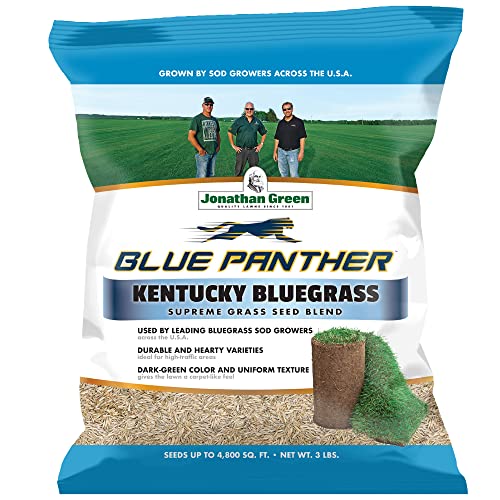
Jonathan Green Blue Panther Kentucky Bluegrass
Consider Blue Panther when maintaining a Kentucky-bluegrass lawn is the goal and you can support its slow start.
- A good fit for
- A thinning Kentucky-bluegrass lawn where the site and maintenance plan still suit the species.
- The tradeoff
- Spreading growth helps an established lawn fill in, but it does not make new bluegrass seed a quick-cover repair.
We may earn a commission from purchases through our links. How this works
Buy on AmazonResearch-based review · Updated
Keep the grass type consistent when that is the objective
Blue Panther is sold as a blend of Kentucky bluegrasses. It is a different proposition from a sun-and-shade mixture containing ryegrass and fescues: the aim is to maintain an all-Kentucky-bluegrass lawn. Jonathan Green specifically presents it as an option for thinning lawns originally established with bluegrass sod.
That is a useful reason to consider the product, provided bluegrass still fits the site. If the existing lawn is declining because of shade, moisture problems or unsuitable care, matching its species will not by itself resolve the cause. Assess why it is thinning before buying seed to preserve the same grass type.
“Blue Panther” also appears on other Jonathan Green warm-season products. Check that the package says Kentucky Bluegrass. This review concerns the three-pound Kentucky-bluegrass blend, not Southern Lawn or Bermudagrass products carrying related branding. The relevant comparison is the actual grass in the bag, its planting directions and your existing lawn—not the brand family alone.[7][8][5][9]
A cultivar blend is not a verified current seed lot
The 2026 Jonathan Green catalog names Krypton, Pivot, Madison and Cutting Edge Kentucky bluegrasses for Blue Panther. It also warns that mixtures can change. Those names help describe what the manufacturer offers, but they do not verify the percentages, germination or purity of a current retail lot.
Read the analysis tag on the package you receive. A product advertised as all Kentucky bluegrass is still subject to the seed-quality information on that tag, including inert matter and other seed. The species description should not be interpreted as a guarantee that every ounce is viable seed or that every seed will establish.
The manufacturer emphasizes dark color, uniform texture and use by sod growers. Those are product claims, not results from a trial conducted for this review. We have not established that the current blend outperforms a named competing bluegrass in your region. Use locally relevant grass and cultivar guidance alongside the tag, especially when a major renovation makes the consequences of a poor fit more expensive.[9][6][7][4]
The three-pound bag’s headline is overseeding coverage
- 3 lb, new lawn
- Up to 2,400 sq ft.[8]
- 3 lb, overseeding
- Up to 4,800 sq ft.[8]
- 1,000 sq ft project
- 1.25 lb new lawn (3 × 1,000 ÷ 2,400) or 0.625 lb overseeding (3 × 1,000 ÷ 4,800).[8]
Read the package and measurement details
The manufacturer label gives up to 4,800 square feet for overseeding and 2,400 square feet for a new lawn. The larger number on the front assumes suitable grass already exists. A bare planting area uses the lower new-lawn coverage, even if it is a small patch inside an otherwise established yard.
At those figures, a 1,000-square-foot project takes 1.25 pounds for new lawn or 0.625 pounds for overseeding. Measure those small amounts carefully and follow the package's application directions; a spreader opening that is convenient for a heavier seed can distribute bluegrass differently. The label provides separate settings for several spreader types, which are starting guidance rather than a substitute for measuring the amount applied.
Keep package sizes separate when shopping. The current website and 2026 catalog disagree on the twenty-five-pound bag's maximum coverage, while the three-pound package label is clear. That larger-bag inconsistency does not justify changing the smaller bag's numbers. Compare the quantity needed for your measured area, and confirm the directions on whichever size you actually buy.[7][8][9]
Budget time for germination before expecting coverage
Before sowing
Prepare soil contact and check any herbicide reseeding restrictions.[8][5]
First shoots
The manufacturer estimates 21–28 days, with spring potentially slower.[8]
Developing lawn
Continue establishment care; germination is not a complete stand.[2][7]
Read the establishment sequence
Jonathan Green gives twenty-one to twenty-eight days for germination and notes that spring plantings may take longer. This is a reason to plan carefully, not to assume the project has failed when faster grasses elsewhere are already visible. Kentucky bluegrass is slower to establish than perennial ryegrass, a distinction also described by Minnesota Extension.
Prepare the ground so seed can contact soil, then lightly rake it in. The label says not to bury it deeper than a quarter-inch. A thick layer of old vegetation or debris can prevent the contact that good seed needs. Review recent herbicide applications and their actual reseeding restrictions before committing to a planting date.
Keep the seedbed moist during the waiting period. As the seedlings develop, reduce watering frequency and increase the amount reaching the root zone, adjusting to local conditions. First green shoots are not a finished lawn. Separate the stages—germination, establishment and later spreading—when deciding when the area can tolerate normal use.[7][8][2][5]
Spreading growth helps after the lawn is established
Kentucky bluegrass can spread through rhizomes and thicken an established stand. That helps explain why it is used for lawns that need recovery from some damage. It does not establish a guaranteed repair speed, and it should not be confused with rapid emergence from newly sown seed.
The current Blue Panther page lists four to eight hours of sunlight and promotes traffic tolerance. Independent species guidance still matters: bluegrass's suitability varies with shade, climate, available water and maintenance. A product name cannot make those conditions irrelevant. If a frequently worn area is also unsuitable for the species, reseeding it repeatedly may not be a durable solution.
Plan for ongoing mowing and seasonal care rather than treating the grass's spreading habit as self-sufficiency. The webpage gives a three-to-four-inch first-mowing milestone, while its package artwork gives two-and-a-half to three inches. Check the actual package and local recommendations. Avoid scalping a young stand or expecting mature-lawn performance before it has had time to develop.[7][8][3][4][5]
Compare a single cultivar only when that distinction matters
Outsidepride Midnight is a useful alternative when you want a specifically named Kentucky-bluegrass cultivar rather than a multi-cultivar blend. Its current product is sold with OptiGrowth coating and has its own seeding rates. Do not compare the two by assuming equal bag weight means equal quantities of seed or identical coverage.
The choice is not settled by color language or the word “premium.” Blue Panther's cultivar blend and Midnight's named-cultivar identity are different purchasing approaches, but neither is proven superior by this review. Regional trials can inform cultivar selection only when the cultivar, growing conditions and tested traits are relevant; they are not automatic tests of a current retail bag.
For a suitable existing bluegrass lawn, Blue Panther offers a straightforward species match with clear three-pound application figures. For a quick-cover deadline, its slow start is the main reason to reconsider the project plan. Buy it for a compatible lawn and a patient establishment process, with the current seed tag completing the decision.[1][7][6][4][2]
When to choose something else

Outsidepride Midnight Kentucky Bluegrass
Compare Midnight for a named Kentucky-bluegrass cultivar rather than Blue Panther’s blend. Its OptiGrowth coating and rates differ; no current-bag performance winner or identical coverage is established here.
Sources & research notes
This review draws on published product information and grass-selection guidance. We have not conducted a hands-on trial of this product. Species guidance helps explain the choice; it is not a trial of the bag you buy.
- Outsidepride: Midnight Kentucky Bluegrass planting guide
Read 2026-09-23
- University of Minnesota Extension: buying turfgrass seed
Read 2026-09-23
- Colorado State University Extension: turfgrass species selection
Read 2026-09-23
- Kansas State Extension: Kentucky bluegrass lawns
Read 2026-09-23
- University of Minnesota Extension: renovating a lawn
Read 2026-09-23
- UMass Extension: understanding the turfgrass seed label
Read 2026-09-23
- Jonathan Green: Blue Panther Kentucky Bluegrass product and planting guide
Read 2026-09-23
- Jonathan Green: Blue Panther three-pound package artwork
Read 2026-09-23
- Jonathan Green: 2026 retail catalog, page 26
Read 2026-09-23
Ready to compare the bag?
Check the package size and seed tag before ordering.