
MA State Guide · Updated March 2026
Best Grass Seed for Massachusetts
Top grass seeds for Massachusetts lawns that handle rocky soil, cold winters, and coastal conditions. Expert picks for Boston, Cape Cod, Worcester, and the Berkshires.
Want county-level recommendations? 14 Massachusetts county guides match seed picks to local climate and soil.
Browse counties ↓As an Amazon Associate I earn from qualifying purchases. Full disclosure
Massachusetts lawn care is a battle against geology. The Wisconsin glaciation didn't just pass through New England — it parked itself here for thousands of years, grinding bedrock into a chaotic mix of boulders, cobbles, sand, and clay that geologists call glacial till. Try to drive a soil probe into the ground in Lexington or Natick and you'll hit a rock within six inches. Try it in Framingham and you'll hit three. Every homeowner who has attempted to install an irrigation system, build a retaining wall, or even plant a shrub in Greater Boston knows the frustration of Massachusetts soil intimately. It's not uniformly bad — it's unpredictably, maddeningly variable, changing from sandy loam to pure gravel to sticky clay within the same backyard. And that variability is the defining challenge of growing grass in the Bay State.
What most people don't appreciate about Massachusetts is how much the climate and soil change across the state's relatively compact footprint. Cape Cod and the Islands sit in Zone 7a with sandy, well-drained soil that dries out by mid-June and stays dry until fall. The Connecticut River Valley around Springfield and Northampton has some of the richest agricultural soil in the Northeast — deep, fertile alluvial deposits that grow grass almost effortlessly. The Worcester Hills occupy a cooler, higher elevation belt in Zone 5b where winter arrives three weeks earlier than the coast and the growing season is noticeably shorter. And the Merrimack Valley from Lowell to Haverhill catches the brunt of nor'easters while dealing with heavy clay soils compacted by decades of industrial history. Each region demands a different seed selection, a different fertilizer schedule, and a different set of expectations.
Road salt is the silent lawn killer in Massachusetts, and nobody talks about it enough. The state applies roughly 700,000 tons of road salt annually, and every spring, that sodium chloride washes off roadways, sidewalks, and driveways directly into the soil along roadsides and front yards. In cities like Worcester, Lowell, and anywhere along Route 9 or Route 2, the first three to five feet of lawn bordering pavement is essentially a salt flat by April. Sodium destroys soil structure, burns root tissue, and prevents grass from absorbing water and nutrients. If you have a strip of dead or thin grass between your sidewalk and street in any Massachusetts town, salt damage is almost certainly the cause — and the fix requires more than just reseeding. You need gypsum to displace the sodium, heavy spring watering to flush it through, and salt-tolerant grass varieties that can handle the annual assault.
The UMass Amherst Extension Turf Program is one of the best-kept secrets in New England lawn care. Run out of the Stockbridge School of Agriculture, they've been conducting turfgrass trials in Massachusetts conditions since the 1960s, and their recommendations are specifically calibrated to New England soils, climate, and pest pressures. Their annual Turf Field Day at the Joseph Troll Turf Research Center in South Deerfield draws professionals from across the region, but their research benefits homeowners too. The UMass Soil Testing Lab in Amherst offers affordable soil analysis — about $20 for a standard test — with lime and fertilizer recommendations specific to Massachusetts conditions. Before you follow generic advice from a national lawn care YouTuber or dump lime on your lawn because your neighbor said to, spend the $20 and find out what your soil actually needs. Massachusetts soil pH ranges from 4.5 in some Berkshire County locations to 7.0 in the limestone-influenced Connecticut Valley, so blanket recommendations are useless here.
The dominant grass across most of Massachusetts is a blend of Kentucky bluegrass and fine fescue, though tall fescue has been gaining ground steadily over the past decade, especially in the warmer southeastern part of the state. The old New England approach — a Kentucky bluegrass lawn maintained at country-club standards — still works in sunny, irrigated properties in Wellesley and Hingham, but it demands more water, more fungicide, and more attention than most homeowners want to provide. The modern Massachusetts lawn, the one that looks great from April through November without heroic effort, is built on an improved tall fescue base with Kentucky bluegrass blended in for self-repair and density. Jonathan Green's Black Beauty Ultra was practically designed for this region, and it shows — drive through any well-maintained neighborhood in Needham, Andover, or Shrewsbury and you'll see the dark green, fine-bladed look of modern turf-type tall fescue everywhere.
Quick Picks: Our Top 3 for Massachusetts
Understanding Massachusetts's Lawn Climate
Humid continental with cold, snowy winters and warm, humid summers. Coastal areas from Boston to Cape Cod are moderated by the Atlantic with milder winters but persistent ocean wind and salt spray. Inland Western Massachusetts (Springfield, the Berkshires) sees significantly colder winters with heavier snowfall. The growing season runs roughly May through October on the coast, shorter inland. Nor'easters can dump heavy wet snow that damages dormant turf, and spring comes late — soil doesn't warm reliably until mid-May.
Key Challenges
Best Planting Time for Massachusetts
Late August through mid-September (fall) is the ideal window; mid-May through early June for spring seeding after last frost
Our Top 3 Picks for Massachusetts
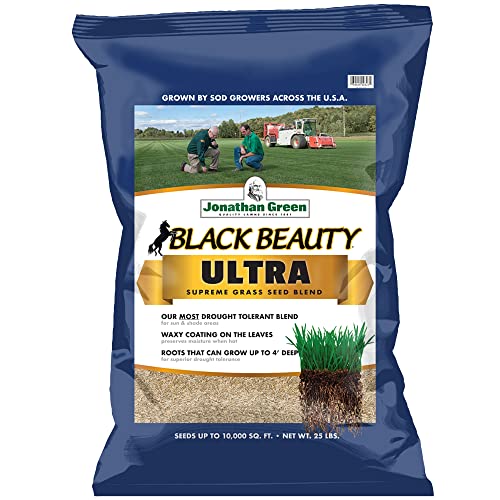
Jonathan Green Black Beauty Ultra
Jonathan Green · Cool Season · $28 (7 lbs) – $105 (25 lbs)
Why this seed for Massachusetts: BBU's Northeast pedigree shows in Massachusetts. The deep roots handle rocky glacial soil, the fescue/KBG blend survives Boston's humid summers, and it bounces back from harsh New England winters.

Outsidepride Midnight Kentucky Bluegrass
Outsidepride · Cool Season · $28-42 for 5 lbs
Why this seed for Massachusetts: For the Massachusetts homeowner chasing that perfect Cape Cod or Wellesley lawn, Midnight KBG produces the deepest blue-green color. Handles the cold winters and looks incredible from spring through fall.
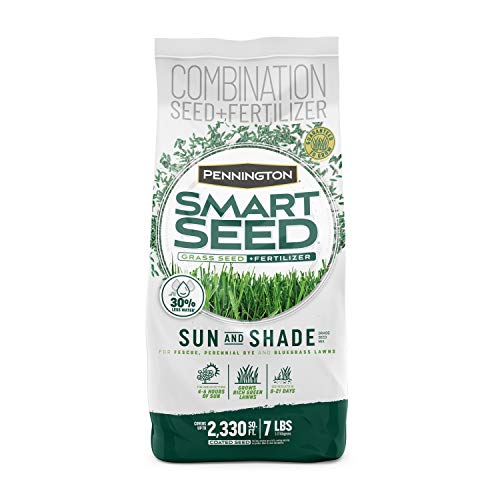
Pennington Smart Seed Sun & Shade
Pennington · Cool Season · $25-40 for 7 lbs
Why this seed for Massachusetts: The best value for typical MA suburban yards with a mix of sun and maple shade. Penkoted coating helps germination in New England's rocky soil, and the blend handles both sunny and shaded areas reliably.
Best Grass Seed by Region in Massachusetts
Greater Boston / Metro West
The Greater Boston metro — from Cambridge and Somerville through the inner suburbs of Newton, Brookline, and Watertown, out to the Route 128 belt communities of Lexington, Wellesley, Natick, and Needham — is where Massachusetts lawn ambitions are highest and the challenges are most concentrated. Lot sizes shrink as you move toward the city, shade from mature oaks and sugar maples is pervasive, and the glacial till soil is a rock-studded, inconsistent mess that varies wildly even within a single property. Salt damage along heavily trafficked roads like Route 9 and Route 2 kills grass every spring. Grub damage from Japanese beetles and European chafers is epidemic across Middlesex and Norfolk counties, with August and September bringing the worst of it. The upside is a moderate Zone 6b climate tempered by the ocean — Boston rarely sees the extreme cold that hammers Worcester or the Berkshires — and a reliable fall seeding window from late August through September that gives new seed plenty of time to establish.
Top picks for this region:
- ✓Grub damage is the number one lawn problem across Middlesex and Norfolk counties — apply preventive grub control (chlorantraniliprole) by early June before Japanese beetle eggs hatch in your turf
- ✓Salt damage along front-yard strips is unavoidable in most Boston suburbs — treat affected areas with gypsum in early spring at 40 lbs per 1,000 sq ft and flush with heavy watering to displace sodium from the root zone
- ✓Shade from mature hardwoods is intense in older neighborhoods like Arlington, Belmont, and Winchester — use a fine fescue blend in areas receiving less than 4 hours of direct sun
- ✓Metro West soils are often compacted glacial till with poor drainage — core aerate annually in fall and topdress with a half-inch of compost to gradually build organic matter in the root zone
Cape Cod / South Shore / Islands
Cape Cod, the South Shore from Plymouth to Marshfield, and the Islands (Martha's Vineyard and Nantucket) represent a completely different lawn care environment than the rest of Massachusetts. The soil is almost pure sand — glacial outwash deposited when the ice sheet melted — with minimal organic matter and virtually no water-holding capacity. Nutrients leach through sandy Cape soil faster than you can apply them. The water table is close to the surface in many areas, but the root zone dries out rapidly in summer because sand doesn't hold moisture. Coastal salt spray compounds the challenge for properties within a mile of the shore. The climate is the mildest in Massachusetts — Zone 7a on the outer Cape — with a longer growing season that extends into November. But the sandy soil and salt exposure mean you need drought-tolerant, salt-tolerant varieties that can perform without heavy irrigation, especially given the Cape Cod Commission's water conservation restrictions that limit lawn watering in many towns during summer.
Top picks for this region:
- ✓Sandy Cape soil needs organic matter more than anything else — topdress annually with a quarter-inch of compost and leave grass clippings on the lawn to build up what the sand lacks naturally
- ✓Many Cape Cod towns restrict lawn watering during summer drought — choose drought-tolerant fescue varieties and mow at 3.5 to 4 inches to maximize water retention in the root zone
- ✓Coastal salt spray can burn turf within a half-mile of the shore — select salt-tolerant varieties and rinse the lawn with fresh water after major storms or high-wind events
- ✓Fertilizer application rates should be lower on sandy soils to reduce nutrient leaching into the Cape's sensitive aquifer — use slow-release nitrogen sources and split applications into smaller, more frequent doses
Connecticut River Valley / Springfield / Northampton
The Connecticut River Valley is Massachusetts' best-kept lawn care secret. While Boston homeowners wrestle with rocks and salt, the Valley has deep, fertile alluvial soil deposited by thousands of years of river flooding — rich, dark, loamy earth that grows grass almost effortlessly. Springfield, Holyoke, Northampton, Amherst, and the surrounding towns sit on some of the best agricultural land in New England, and it shows in the lawns. The climate is Zone 6a, slightly cooler than the coast, with distinct seasons and reliable precipitation. The challenges here are different from eastern Massachusetts: summer humidity in the sheltered valley creates ideal conditions for fungal diseases like brown patch and dollar spot, the Connecticut River watershed floods periodically, and shade from the valley's dense hardwood canopy — sugar maples, white ash, red oaks — is heavy in established neighborhoods. But if you have decent sun exposure and this valley soil, you're working with some of the easiest lawn-growing conditions in the state.
Top picks for this region:
- ✓Valley soil is often naturally fertile with pH near 6.5 — get a UMass soil test before applying lime, as many Valley properties don't need it despite the common New England assumption that all soil here is acidic
- ✓Summer humidity trapped in the valley creates prime conditions for brown patch fungus — avoid nitrogen applications between June 15 and September 1 on tall fescue lawns
- ✓The Connecticut River floodplain can saturate lawns during spring snowmelt — if your property is in a flood-prone area, choose tall fescue over Kentucky bluegrass for its better tolerance of periodic waterlogging
- ✓This region's soil quality makes it one of the few places in Massachusetts where a pure Kentucky bluegrass lawn is realistic without extraordinary effort — take advantage of it if you have full sun
Central Massachusetts / Worcester
Worcester and the surrounding hilltowns of central Massachusetts sit at higher elevations — the city itself is around 1,000 feet — in the cooler Zone 5b to 6a range, which means a shorter growing season, colder winters, and later spring green-up than the coast or the Valley. The last frost comes a full two to three weeks later than Boston, and the first fall frost arrives earlier, compressing the prime lawn care window. The soil is classic glacial till: rocky, variable, and often acidic, with pH values commonly in the 5.0 to 5.5 range in areas underlain by granite bedrock. Central Massachusetts gets more snow than the coast — Worcester averages around 65 inches annually — and the extended snow cover can lead to gray and pink snow mold in spring. The Blackstone Valley south of Worcester has a history of industrial contamination that can affect soil quality in some neighborhoods. Despite the challenges, the region's cooler climate is actually ideal for Kentucky bluegrass and fine fescue, which thrive in the lower heat stress environment.
Top picks for this region:
- ✓Central MA soils are frequently very acidic (pH 5.0-5.5) due to granite bedrock — pelletized lime is often needed annually, but always confirm with a UMass soil test before applying
- ✓The compressed growing season means your fall overseeding window is tighter than the coast — aim for mid-August through early September in Worcester, two weeks earlier than Boston-area timing
- ✓Snow mold is common after heavy snow winters — avoid late-fall nitrogen applications and rake matted patches in early spring to promote recovery and air circulation
- ✓Road salt damage is severe in Worcester, which salts heavily due to its hilly terrain — flush roadside strips with gypsum and extra water every April
Planting calendar
Massachusetts seed timing lives in its own calendar
Use this buying guide for seed picks. Use the calendar page when you need the season-by-season plan, local timing rule, and prep checklist before you spread seed.
Best window
Late August through mid-September (fall) is the ideal window; mid-May through early June for spring seeding after last frost
Cool-season
Fall carries the result
50 to 65F soil
Massachusetts Lawn Tips You Won't Find on the Seed Bag
Salt Damage Is Massachusetts' Hidden Lawn Epidemic
The Commonwealth dumps hundreds of thousands of tons of road salt every winter, and it all ends up somewhere — usually the first five feet of your front lawn. Sodium chloride destroys soil structure, prevents nutrient uptake, and burns roots. Every spring, apply 40 lbs of pelletized gypsum per 1,000 sq ft to salt-affected strips and flush with heavy watering for two weeks. Reseed with salt-tolerant varieties like those in the Pennington Smart Seed Sun and Shade mix, which handles saline soil better than straight Kentucky bluegrass.
UMass Soil Testing Is the Best $20 You'll Spend on Your Lawn
The UMass Amherst Soil Testing Lab provides specific lime, nutrient, and organic matter recommendations calibrated to New England conditions. Massachusetts soil pH varies wildly — from 4.5 in granitic Berkshire County to near 7.0 in the limestone-influenced Connecticut Valley — so blanket lime recommendations from bag labels or neighbors are worse than useless. Submit your sample in winter for fastest turnaround so results arrive before spring.
Grub Control Timing Is Non-Negotiable in Eastern Massachusetts
Japanese beetle grubs devastate lawns across Middlesex, Norfolk, and Plymouth counties every August and September. The larvae feed on grass roots underground, turning your lawn into a brown carpet that peels back with a gentle tug. Preventive application of chlorantraniliprole (GrubEx) by early June is critical — once you see damage in August, the grubs are large and much harder to kill. Skunks and raccoons tearing up your lawn at night are a secondary sign that grubs are present.
Massachusetts Restricts Phosphorus Fertilizer — Know the Law
Massachusetts law restricts the use of phosphorus-containing fertilizers on established lawns unless a soil test shows a deficiency. The exception is at establishment — when seeding or sodding new turf. This means your fall overseeding is the one time you can legally apply a starter fertilizer with phosphorus. Plan your seeding around this window, and for routine feeding, use a phosphorus-free formulation like a 24-0-6 or 22-0-4 to stay compliant.
Cape Cod Lawns Need a Completely Different Approach
If you're on the Cape, throw out everything you know about mainland Massachusetts lawn care. Sandy glacial outwash soil drains instantly, holds almost no nutrients, and dries out within days of rain. Organic matter is your most important amendment — compost topdressing, leaving clippings, and mulch-mowing leaves all build the water-holding capacity that sand lacks. Use slow-release fertilizers exclusively, because fast-release nitrogen flushes straight through sandy soil and into the Cape's sensitive aquifer.
Fall Seeding Window Varies by 3 Weeks Across the State
Massachusetts may be a small state, but the fall overseeding window differs significantly by region. In central and western Massachusetts (Worcester, Springfield, the Berkshires), aim for mid-August through early September — first frost can arrive by late September. On the coast and in Metro Boston, you have until mid-to-late September. On Cape Cod, the mild Zone 7a climate lets you push into early October if needed. Soil temperature is the real guide — seed when it drops to 50-65 degrees at the 4-inch depth.
The Berkshires Are a Full Zone Colder Than the Cape — Stop Treating Massachusetts as One Climate
It's easy to forget how much winter hardiness changes across this small state until a Pittsfield lawn and a Falmouth lawn green up nearly a month apart. Western Massachusetts and the Berkshire hills sit in USDA Zone 5b with reliable deep cold and a short growing season, while Cape Cod and the Islands enjoy maritime-moderated Zone 7a winters where the ground barely freezes hard. That spread matters for grass choice: in the hill towns you want the most winter-hardy Kentucky bluegrass and fine-fescue blends and an earlier fall seeding deadline, whereas the Cape can carry turf-type tall fescue that would marginally winterkill in the Berkshires. National 'Northeast' seed recommendations split the difference and serve neither end well — pick for your elevation and proximity to the coast, not for the state line.
Red Thread Is the Disease That Outs an Underfed Massachusetts Lawn
If you see ragged pink-to-tan patches with fine reddish threads webbing the blade tips during the cool, wet stretches of late spring and early fall, that's red thread, and in Massachusetts it's less a disease problem than a fertility tell. Red thread thrives on the low-nitrogen, perennial-ryegrass-and-fescue lawns that are common here, and it shows up worst on turf that's hungry going into the humid shoulder seasons. The fix is almost never a fungicide — it's a light, balanced nitrogen feeding to push the grass through it, plus better morning airflow and watering early in the day so blades dry fast. Because the state's phosphorus restrictions limit your spring options, lean on a nitrogen source and time your real feeding for fall. Red thread is cosmetic and the grass recovers; treat it as a nudge to fix your feeding schedule, not as a reason to spray.
Coastal Sand and Inland Clay Demand Different Watering — and Different Grass
Massachusetts soils run to two extremes that change everything about how you water. The Cape, the South Shore, and the Islands sit on fast-draining glacial sand that can't hold water or nutrients — those lawns need light, frequent irrigation and slow-release feeding because anything heavy leaches straight through to the aquifer the state is so protective of. Inland, much of central and western Massachusetts carries heavy glacial-till clay and ledge that holds water for days, drowns roots, and turns to concrete in a dry July. On the sandy coast, drought-tolerant fine fescues that thrive in lean soil are the smart play; on inland clay, the priority is core aeration to fight compaction and a grass with the deep roots to punch through it. Knowing which soil you're on tells you more about your watering schedule than any calendar will.
What Massachusetts Lawn Pros Actually Plant
Turf-Type Tall Fescue
Most PopularTall fescue has overtaken Kentucky bluegrass as the grass of choice for Massachusetts homeowners who want a great-looking lawn without a golf course maintenance budget. Its deep root system handles the rocky glacial soil better than bluegrass's shallow rhizomes, it tolerates moderate shade from New England's hardwood canopy, and it shrugs off the summer heat that sends bluegrass dormant in July. Jonathan Green Black Beauty Ultra is practically the official grass seed of Massachusetts at this point — walk into any independent garden center from Mahoney's in Winchester to Weston Nurseries in Hopkinton and you'll see pallets of it from August through October. Modern TTTF varieties are fine-bladed and dark green, nothing like the coarse K-31 of decades past.
Kentucky Bluegrass
Very PopularKentucky bluegrass remains the aspirational choice for Massachusetts lawns, especially in sunny suburban lots across the South Shore, MetroWest, and the Connecticut Valley where full sun is available. Midnight Kentucky Bluegrass is the variety serious lawn enthusiasts gravitate toward for its exceptionally dark color and improved disease resistance. The challenge is that pure KBG lawns in Massachusetts need supplemental irrigation through summer dry spells, preventive fungicide in humid years, and full sun — requirements that rule it out for many shaded, rocky New England properties. Most locals blend 15-20% KBG into a tall fescue base for the best of both worlds: self-repair from bluegrass rhizomes with the durability and shade tolerance of fescue.
Fine Fescue
Very PopularFine fescues — creeping red, chewings, hard fescue, and sheep fescue — are essential in Massachusetts, where mature sugar maples, red oaks, and white pines cast deep shade across countless residential lots. In older neighborhoods of Arlington, Lexington, Concord, and the North Shore towns, fine fescue blends are often the only grasses that will maintain a viable stand under the heavy hardwood canopy. They're also the lowest-maintenance option: less fertilizer, less water, less mowing. The trade-off is poor traffic tolerance and a tendency to thin in full sun during hot summers, so they work best as a shade component blended with tall fescue rather than a standalone lawn.
Perennial Ryegrass
Common in BlendsPerennial ryegrass is a supporting player in Massachusetts blends rather than a standalone lawn grass. Its 5-7 day germination speed makes it valuable as a nurse crop in fall overseeding mixes, giving homeowners quick visual results while slower fescue and bluegrass varieties establish underneath. It has excellent wear tolerance, making it the dominant grass on New England athletic fields and school playgrounds. The weakness is winter hardiness — harsh winters in central and western Massachusetts can thin ryegrass stands, and it lacks the heat tolerance of tall fescue. Keep ryegrass under 20% of your blend to avoid a lawn that looks great in October but thins out by the following summer.
Low-Maintenance Eco-Lawn Mixes
Growing in PopularityA growing number of Massachusetts homeowners, particularly in progressive communities like Northampton, Amherst, Cambridge, and the Cape Cod towns, are moving away from traditional lawn monocultures toward low-input fine fescue and clover mixes that need minimal mowing, no irrigation, and little to no fertilizer. The Massachusetts Healthy Yards program encourages reduced-input lawn care, and towns like Concord and Falmouth have embraced pollinator-friendly landscaping ordinances. Fine fescue eco-lawn blends that incorporate micro-clover fix their own nitrogen, stay green with rainfall alone, and can be mowed as infrequently as once every two weeks at 4 inches.
Massachusetts Lawn Seeding Tips
Getting the best results from your grass seed in Massachusetts comes down to timing, soil prep, and choosing the right variety for your specific conditions. Here are our top tips:
- Test your soil first. A $15 soil test from your Massachusetts extension office tells you exact pH and nutrient levels. Most cool-season grasses prefer pH 6.0-7.0.
- Prep the seedbed properly. Rake or aerate to ensure good seed-to-soil contact. This single step improves germination rates more than any seed coating or starter fertilizer.
- Use a starter fertilizer. Apply a phosphorus-rich starter fertilizer at seeding time to promote root development. We recommend Scotts Starter Fertilizer or The Andersons Starter.
- Water correctly. Keep the seedbed consistently moist (not soaked) for the first 2-4 weeks. Light watering 2-3 times per day is better than one heavy soaking.
- Be patient. Kentucky Bluegrass takes 14-28 days to germinate. Tall Fescue is faster at 7-14 days. Don't panic if you don't see results immediately.
- Consider pre-germinating KBG. If you're planting Kentucky Bluegrass, you can cut germination time from 30 days to under a week using the bucket-and-bubble pre-germination method. This is especially valuable for late-season seeding in Massachusetts.
Frequently Asked Questions
When is the best time to plant grass seed in Massachusetts?
Late August through mid-September (fall) is the ideal window; mid-May through early June for spring seeding after last frost
What type of grass grows best in Massachusetts?
Massachusetts is best suited for cool-season grasses like Kentucky Bluegrass, Tall Fescue, and Perennial Ryegrass. These grasses thrive in spring and fall, stay green longer into winter, and handle cold temperatures well.
What are the biggest lawn care challenges in Massachusetts?
The main challenges for Massachusetts lawns include rocky glacial soil difficult to amend, road salt damage on lawns near streets, short growing season, shade from mature oaks and maples. Choosing the right grass variety that is adapted to these specific conditions is the single most important decision you can make for your lawn.
Can I grow Kentucky Bluegrass in Massachusetts?
Absolutely — Kentucky Bluegrass is one of the best choices for Massachusetts. It thrives in the cool-season climate, produces a beautiful dense lawn, and self-repairs through rhizome spread. Midnight KBG is our top pick for the darkest, most premium-looking lawn.
How much does it cost to seed a lawn in Massachusetts?
For a typical 5,000 sq ft lawn, expect to spend $150-$400 on seed alone depending on the variety. Premium seeds like Midnight Kentucky Bluegrass or Zenith Zoysia cost more per pound but deliver better results. Add $50-$100 for starter fertilizer and $20-$50 for soil amendments. The seed is the smallest part of your total investment — proper soil prep and consistent watering matter more than saving $50 on cheaper seed.
More Lawn Care Resources
Best Grass Seed 2026 Rankings
See our national top picks across all grass types.
Massachusetts Planting Calendar
Use the dedicated seasonal calendar before you seed.
Pre-Germination Guide
Cut KBG germination from 30 days to under a week.
Best Starter Fertilizer
Give new seed the nutrients it needs to establish.
Browse Massachusetts county guides
14 counties · climate-matched recommendations for each
Hardiness Zone 5b
Cool-season grasses2 countiesHardiness Zone 6b
Transition zone — both cool and warm work4 countiesHardiness Zone 6a
Transition zone — both cool and warm work3 countiesHardiness Zone 7a
Transition zone — both cool and warm work3 countiesHardiness Zone 7b
Transition zone — both cool and warm work2 countiesNearby State Guides
Not in Massachusetts?
We have state-specific grass seed guides for all 50 states.