
SC State Guide · Updated March 2026
Best Grass Seed for South Carolina
Top grass seeds for South Carolina lawns from the Upstate to the Lowcountry. Expert picks for Charleston, Columbia, Greenville, and Myrtle Beach.
Want county-level recommendations? 46 South Carolina county guides match seed picks to local climate and soil.
Browse counties ↓As an Amazon Associate I earn from qualifying purchases. Full disclosure
South Carolina lawn care is really two different worlds separated by a geological boundary called the Fall Line. Drive I-20 from Rock Hill to Florence and you'll cross it somewhere around Camden — the red clay Piedmont of the Upstate gives way to the sandy Coastal Plain that stretches to the Atlantic. Above the line, Greenville and Spartanburg homeowners fight compacted red clay, acidic soil, and the transition zone dilemma of choosing between warm-season and cool-season grasses. Below it, Columbia, Charleston, and Myrtle Beach residents deal with sand that won't hold nutrients, relentless humidity, and a summer heat index that regularly pushes past 110 degrees. Your neighbor's lawn advice might be dead wrong for your yard if they grew up on the other side of the Fall Line. This is why Clemson Extension's soil testing lab — free for South Carolina residents, by the way — should be your first stop before you buy a single bag of seed or fertilizer.
Bermuda grass runs the show across most of South Carolina, and it's not close. From the Clemson University campus to the fairways at Kiawah Island, bermuda's aggressive growth, heat tolerance, and self-repairing nature make it the default choice for full-sun lawns. But South Carolina's version of the bermuda obsession comes with a coastal twist: salt tolerance matters here in a way it doesn't in landlocked states. On the barrier islands — Hilton Head, Isle of Palms, Sullivan's Island, Pawleys Island — and in Lowcountry neighborhoods backed up against tidal marshes, salt spray and storm surge are real threats to your lawn. Bermuda handles moderate salt exposure better than centipede or zoysia, which is why you see it dominating oceanfront properties from Myrtle Beach to Beaufort. Inland, homeowners have more flexibility, and the choice between bermuda, centipede, and zoysia usually comes down to sun exposure and maintenance tolerance.
The Upstate around Greenville and Spartanburg sits in USDA Zone 7b to 8a, which technically makes it transition zone territory. This creates a genuine choice that homeowners further south don't have: tall fescue can survive here with effort, staying green year-round while bermuda lawns sit brown from November through March. Drive through Travelers Rest or Greer in January and you'll spot the fescue lawns immediately — they're the green ones surrounded by dormant brown bermuda. The catch is that Upstate summers are still brutal, with July highs in the mid-90s and humidity that makes 92 feel like 105. Fescue needs 1.5 inches of water per week, 4-inch mowing height, and annual September overseeding to survive. Most Upstate lawn services will steer new customers toward bermuda or zoysia because the maintenance math is simpler, but there's a dedicated fescue contingent in the Greenville area that swears by the year-round green.
Centipede grass has a special place in South Carolina's Midlands and Lowcountry. Drive through any established neighborhood in West Columbia, Irmo, Lexington, or Summerville and you'll see centipede everywhere — that slightly yellow-green, medium-textured grass that looks decent without much effort. South Carolina's naturally acidic soils (pH 5.0 to 5.5 in many areas) are exactly what centipede prefers, and the sandy Coastal Plain soil drains well enough to prevent the root rot issues that plague centipede on heavy clay. Clemson Extension has been recommending TifBlair centipede for decades as the improved variety with better cold hardiness, extending centipede's reliable range into the Upstate. The cardinal rule remains the same: do not over-fertilize centipede. One to two pounds of nitrogen per thousand square feet per year, period. More than that triggers centipede decline, and you'll watch your lawn die in patches wondering what went wrong.
One thing every South Carolina homeowner learns eventually: the insects here are relentless. Chinch bugs devastate St. Augustine and centipede lawns in the Lowcountry and along the Grand Strand every summer. Mole crickets tunnel through sandy soil from Charleston to Hilton Head, turning firm turf into a spongy mess. Fire ants build mounds in every lawn regardless of grass type, and armyworms sweep through on late-summer weather fronts from the Gulf, capable of stripping a bermuda lawn bare in 48 hours. The humidity that makes South Carolina summers feel oppressive also fuels fungal diseases — large patch in zoysia, dollar spot in bermuda, brown patch in fescue. Integrated pest management isn't optional here; it's the cost of having a lawn in a subtropical climate. Your Clemson Extension office has field-tested recommendations for every pest specific to your county, and their Master Gardener program is one of the best free resources in the state.
Quick Picks: Our Top 3 for South Carolina
Understanding South Carolina's Lawn Climate
Humid subtropical with long, hot summers and short, mild winters. The Upstate around Greenville sits in the foothills of the Blue Ridge and is cooler with occasional winter freezes, while the Lowcountry from Charleston to Hilton Head is nearly tropical. Columbia, the capital, is one of the hottest cities in the Southeast with summer highs regularly exceeding 100F. The coast adds salt exposure and sandy soil to the equation. Humidity is extreme statewide from May through September, creating ideal conditions for fungal diseases.
Key Challenges
Best Planting Time for South Carolina
Late April through June for warm-season grasses when soil is consistently above 65F; September-October for fescue in the Upstate only
Our Top 3 Picks for South Carolina
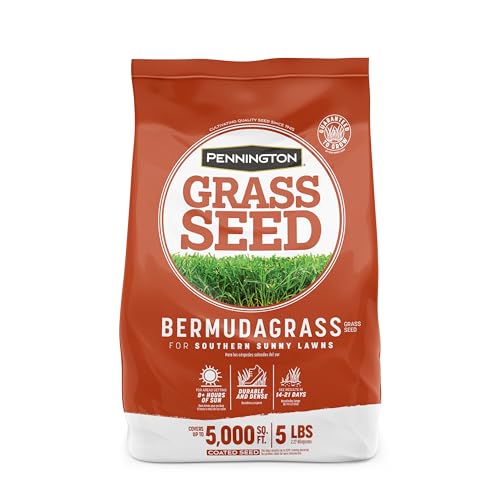
Pennington Smart Seed Bermudagrass
Pennington · Warm Season · $20-35 for 8.75 lbs
Why this seed for South Carolina: Bermuda is the workhorse grass for South Carolina from Columbia to the coast. Handles the sandy soil, intense heat, and year-round growing season. Pennington's WaterSmart coating aids establishment in the hot months.
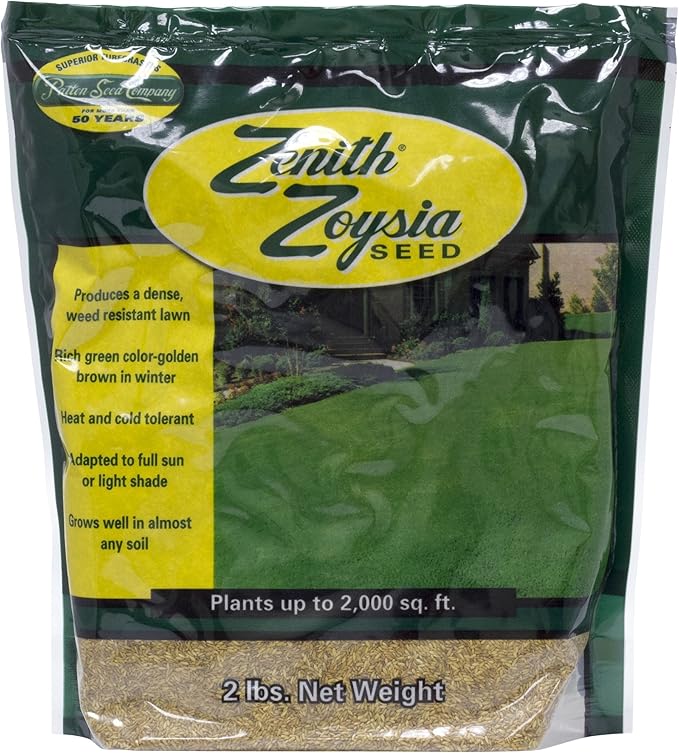
Pennington Zenith Zoysia Grass Seed & Mulch
Pennington · Warm Season · $25-45 for 5 lbs
Why this seed for South Carolina: For SC homeowners who want a step up from bermuda, Zenith Zoysia creates a denser, softer lawn that handles shade better — crucial under live oaks and magnolias. Cold-hardy enough for the Upstate.
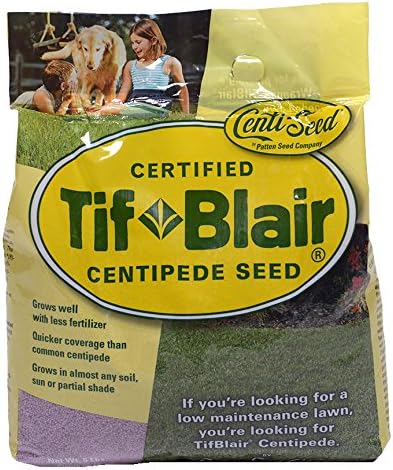
TifBlair Centipede Grass Seed
Patten Seed Company · Warm Season · $20 (1 lb) – $238 (5 lbs)
Why this seed for South Carolina: Centipede is the low-maintenance champion for South Carolina. It thrives in the acidic sandy soil of the Coastal Plain with minimal fertilizer. Perfect for the homeowner who wants green without the bermuda maintenance treadmill.
Best Grass Seed by Region in South Carolina
Upstate / Greenville-Spartanburg
The Upstate — Greenville, Spartanburg, Anderson, Clemson, and the foothills communities stretching up toward the Blue Ridge — sits in Zone 7b to 8a on Piedmont red clay. This is South Carolina's transition zone, where both warm-season and cool-season grasses can work depending on site conditions and homeowner commitment. Summers are hot but slightly less punishing than Columbia or the coast, and winter lows regularly hit the low 20s with occasional teens during polar vortex events. The red clay compacts severely under construction traffic, and new subdivisions in Simpsonville, Mauldin, Five Forks, and Boiling Springs typically have yards with minimal topsoil over raw subsoil. Bermuda dominates new construction for full-sun lots, but zoysia is gaining ground rapidly in neighborhoods with mature tree canopy. Tall fescue is viable here for homeowners willing to invest in irrigation and annual overseeding.
Top picks for this region:
- ✓Core aerate in May and September — Upstate red clay compacts so badly that water puddles on the surface rather than infiltrating, and double-pass aeration is the only mechanical fix
- ✓If you choose fescue in the Upstate, commit to overseeding every September and raising mowing height to 4 inches from June through August — half measures result in a patchy, thin lawn by year three
- ✓Pre-emergent timing for Greenville-Spartanburg is typically the second week of March when Bradford pears bloom along I-85 — this is your reliable local indicator
- ✓Lime heavily on Upstate red clay — Clemson soil tests frequently show pH below 5.5, and most grasses except centipede need 40 to 50 lbs of pelletized lime per 1,000 sq ft annually until pH reaches 6.0
Midlands / Columbia
The Midlands centered on Columbia — including Lexington, Irmo, West Columbia, Blythewood, Elgin, and Camden — straddle the Fall Line where red clay meets sandy loam. Zone 8a delivers some of the most extreme heat in the state: Columbia regularly tops 100 degrees in July and August, earning its reputation as one of the hottest cities in the Southeast. The soil is highly variable within the same neighborhood — you might dig red clay in the front yard and hit sand in the back, depending on your position relative to the Fall Line. Bermuda is the dominant grass in newer subdivisions across Lexington County and Northeast Columbia, while centipede holds strong in established neighborhoods throughout West Columbia, Cayce, and the older parts of Richland County. The massive Lake Murray community has its own microclimate, with lake-effect moderation reducing extreme lows by a few degrees and extending the bermuda growing season slightly.
Top picks for this region:
- ✓Columbia's extreme summer heat makes irrigation essential for all grass types — plan for 1 to 1.25 inches per week from June through September, watering deeply in early morning to minimize evaporation loss
- ✓Soil along the Fall Line in the Midlands can shift from clay to sand within the same lot — test multiple areas of your yard rather than assuming one Clemson soil test represents the whole property
- ✓Centipede in the Midlands thrives because the naturally acidic sandy loam is its ideal soil — resist the urge to lime unless your soil test specifically shows pH below 5.0
- ✓Lake Murray lakefront properties benefit from slightly moderated temperatures but face erosion and runoff challenges on sloped lots — bermuda's deep root system and aggressive lateral growth make it the best choice for stabilizing lake-adjacent slopes
Lowcountry / Charleston
The Lowcountry from Charleston down through Beaufort, Hilton Head, and Bluffton to the Georgia border is Zone 8b — warm, wet, and heavily influenced by the Atlantic Ocean and tidal marshes. Sandy soil dominates, often with a high water table that creates drainage challenges during the summer monsoon pattern. Charleston gets over 50 inches of rain annually, but it comes in intense afternoon thunderstorms that dump 2 inches in an hour and then nothing for a week. Salt exposure is a daily reality for properties within a mile of the coast or adjacent to tidal creeks, and hurricane storm surge can temporarily salinate lawns well inland. Live oaks draped in Spanish moss define the Lowcountry landscape, and their dense canopy creates heavy shade that eliminates bermuda as an option in many historic Charleston neighborhoods. Centipede and St. Augustine (sod only) dominate older areas, while bermuda and zoysia split newer construction in Mount Pleasant, Daniel Island, Summerville, and Johns Island.
Top picks for this region:
- ✓Salt spray on Hilton Head, Sullivan's Island, and Isle of Palms eliminates centipede and zoysia from oceanfront properties — bermuda is the only seeded grass with meaningful salt tolerance for barrier island lots
- ✓Sandy Lowcountry soil needs split fertilizer applications: three light nitrogen passes (April, June, August) instead of two heavy ones, because heavy rain will flush a single large application straight through the sand profile
- ✓Mole crickets are the signature pest of Lowcountry sandy soils — scout for their tunneling damage (spongy soil, raised ridges) in May and June, and treat with bifenthrin or beneficial nematodes
- ✓Under Charleston's massive live oaks, accept that grass may not grow — Zenith zoysia handles filtered light, but directly under the drip line where surface roots compete for everything, mulch beds are the realistic answer
Grand Strand / Myrtle Beach
The Grand Strand from North Myrtle Beach through Myrtle Beach, Surfside Beach, Murrells Inlet, and Pawleys Island down to Georgetown is Zone 8b with a unique microclimate shaped by the ocean and the Waccamaw River system. Sandy soil is the norm — often nearly pure beach sand on barrier island lots — and salt exposure ranges from moderate (a few blocks inland) to severe (oceanfront). The tourism economy means many properties sit vacant for months, making low-maintenance grass selection critical for rental and vacation homes. Bermuda dominates commercial properties, golf course roughs, and newer subdivisions in Carolina Forest and Conway, while centipede is the traditional residential choice for established neighborhoods. The Grand Strand gets hurricane impacts regularly, and storm surge flooding can kill grass through salt saturation even miles from the beach. Year-round mild temperatures (Zone 8b rarely sees hard freezes) mean bermuda dormancy is short — often just 8 to 10 weeks — and some winters it barely goes fully dormant at all.
Top picks for this region:
- ✓Vacation properties along the Grand Strand should default to centipede — it survives neglect better than bermuda, which thins rapidly without regular mowing and becomes weedy when left unattended for weeks
- ✓After any tropical storm or hurricane flooding, flush the lawn with 2 to 3 inches of fresh water daily for a week to leach salt out of the sandy soil profile — the faster you dilute, the less permanent damage
- ✓Sandy Grand Strand soil needs micronutrient supplementation that clay soils provide naturally — apply iron sulfate in June for dark green color, and include manganese in your fertilizer program based on Clemson soil test results
- ✓Pre-emergent timing on the Grand Strand is earlier than the rest of the state — mid-February in most years, when soil temperatures at 4-inch depth hit 55 degrees about two weeks before Columbia
Pee Dee / Florence
The Pee Dee region — Florence, Hartsville, Marion, Dillon, and the agricultural communities along the Great Pee Dee River — sits on the inner Coastal Plain in Zone 8a. The soil is a mix of sandy loam and alluvial clay along the river bottoms, generally more fertile than the pure sand of the coast or the red clay of the Upstate. This is tobacco and cotton country, and the flat agricultural landscape means full sun exposure on most residential lots. Florence serves as the commercial hub, with newer subdivisions on the east and south sides of the city expanding into former farmland. Bermuda is the overwhelming favorite here — the combination of full sun, long hot summers, and relatively fertile soil creates ideal bermuda growing conditions. Centipede fills the low-maintenance niche, particularly in rural areas and on larger lots where the lower input requirements align with a practical approach to lawn care.
Top picks for this region:
- ✓Pee Dee alluvial soils along the river bottoms are among the most fertile in the state — soil test before fertilizing, because excess nitrogen on already-rich soil creates thatch problems and disease susceptibility
- ✓Armyworms hit the Pee Dee region hard every September, migrating north from the coast — check your lawn weekly from late August through October using the soap flush test (2 tablespoons of dish soap per gallon of water)
- ✓Full sun exposure across the flat Pee Dee landscape means bermuda performs at its absolute best here — don't overthink the grass choice if your yard gets 8-plus hours of direct sun
- ✓Fire ant mounds are everywhere in the Pee Dee — treat individual mounds with bait products in spring and fall rather than broadcasting insecticide across the entire lawn
Planting calendar
South Carolina seed timing lives in its own calendar
Use this buying guide for seed picks. Use the calendar page when you need the season-by-season plan, local timing rule, and prep checklist before you spread seed.
Best window
Late April through June for warm-season grasses when soil is consistently above 65F; September-October for fescue in the Upstate only
Warm-season
Warm soil first
65F+ soil
South Carolina Lawn Tips You Won't Find on the Seed Bag
Clemson Extension Is Your Free Lawn Consultant
South Carolina residents get free soil testing through Clemson University's Agricultural Service Laboratory — one of the best deals in lawn care anywhere in the country. Mail in your sample or drop it at your county Extension office, and you'll get back a detailed report with exact lime and fertilizer recommendations calibrated to South Carolina soils. The Clemson Home and Garden Information Center (HGIC) also publishes fact sheets on every grass type, pest, and disease relevant to SC lawns, written by turfgrass researchers who actually test their recommendations on Palmetto State soil.
Dealing with Red Clay in the Upstate
Greenville-Spartanburg red clay is every bit as challenging as Georgia's, and the fix is the same multi-year commitment: core aerate twice annually (May and September), topdress with a half-inch of compost after each aeration, and apply gypsum at 40 lbs per 1,000 sq ft to improve clay aggregation without raising pH. New construction in Simpsonville, Mauldin, and Greer is the worst offender — builders scrape topsoil, compact the subsoil with heavy equipment, then lay bermuda sod directly on raw red clay. That sod is struggling within two years unless you break the compaction cycle.
Salt Exposure on the Barrier Islands Is No Joke
Homeowners on Hilton Head, Kiawah, Sullivan's Island, Isle of Palms, and Pawleys Island face a challenge that inland South Carolinians never think about: airborne salt spray. Within a half-mile of the ocean, salt deposits on grass blades and accumulates in soil, causing burn on sensitive species. Bermuda tolerates moderate salt exposure better than any other seeded warm-season grass. Centipede and zoysia struggle within two blocks of the water. After hurricanes or nor'easters, flush your lawn with fresh water for several consecutive days to leach accumulated salt before it kills the root system.
Chinch Bugs Are the Lowcountry's Silent Lawn Killer
Southern chinch bugs cause more unexplained lawn death in the Charleston and Myrtle Beach areas than any other single pest. They feed by piercing grass blades and injecting a toxin that blocks water uptake, creating irregular brown patches that homeowners mistake for drought stress. The telltale difference: chinch bug damage doesn't recover with watering. Part the grass at the edge of a brown patch on a hot afternoon and look for tiny black-and-white insects scurrying away from sunlight. Treat with bifenthrin at the first sign, because a two-week delay can mean losing hundreds of square feet of turf.
Overseeding with Ryegrass for Winter Color
Many South Carolina homeowners, especially in the Midlands and Upstate, overseed their dormant bermuda with perennial ryegrass in October for winter green color. It works — your lawn stays green from October through April while neighbors look at brown bermuda. But there's a real trade-off: ryegrass competes with bermuda during spring transition, potentially delaying bermuda green-up by 2 to 3 weeks and thinning the stand. Clemson turf specialists generally recommend against overseeding unless appearance during dormancy is a priority, because the competition stress on bermuda outweighs the aesthetic benefit for most homeowners.
Fire Ants Are a Permanent Reality
Red imported fire ants are in every county in South Carolina, and elimination is impossible — management is the realistic goal. Broadcast a fire ant bait product (containing hydramethylnon or spinosad) across your entire lawn in April and again in October when ants are actively foraging. Individual mound treatments with contact insecticide provide immediate knockdown but don't address the colony network. Clemson Extension's 'Two-Step Method' — broadcast bait followed by individual mound treatment two weeks later — is the most effective approach tested for South Carolina conditions.
Fall Brown Patch Is the State's Signature Lawn Disease
Large patch — often called brown patch — is the fungal disease South Carolina homeowners battle most, and it's a fall and spring problem, not a summer one. It hits when soil temperatures drop into the 60-to-75-degree range, which means September through November and again in March and April. You'll see roughly circular patches a few feet across, with a distinctive orange-to-tan advancing edge, in centipede, zoysia, and St. Augustine especially. The disease feeds on the lush, tender growth that late-season nitrogen produces, which is exactly why Clemson advises cutting off nitrogen to warm-season grasses by late summer. Prevention beats cure here: stop fertilizing centipede after July 1, water only in early morning so blades dry by midday, and apply a preventive fungicide (azoxystrobin or propiconazole) in mid-September if your lawn has a history of large patch. Once you see the orange ring, you're already playing defense.
Spring Dead Spot in Bermuda Lawns
If your bermuda lawn greens up beautifully in spring except for distinct dead circles that stay brown well into May, you're looking at spring dead spot — a root-rotting fungal disease that's increasingly common in well-maintained South Carolina bermuda, particularly in the Upstate and Midlands where winters are cold enough to weaken the grass. The fungus attacks roots in fall but the damage only becomes visible the following spring when the affected areas fail to break dormancy. The patches can persist and enlarge year over year if untreated. Management is a long game: avoid excess late-season nitrogen (which worsens it), improve drainage and reduce thatch, maintain proper soil potassium, and apply a fall fungicide (fenarimol or azoxystrobin) in October when soil temps drop below 70 degrees. Affected areas will slowly fill back in over summer as bermuda's stolons grow across the dead spots, but a heavily infected lawn may need overseeding or plugging to recover fully.
Armyworms and the September Soap-Flush Habit
Fall armyworms ride summer weather fronts up from the Gulf and Florida, and South Carolina lawns — especially in the Pee Dee and Midlands — get hit hard from late August through October. A heavy infestation can strip a green bermuda lawn down to brown stubble in 48 hours, and homeowners who've never seen it assume their lawn suddenly died of drought. The caterpillars feed at dawn and dusk and hide in the thatch during the heat of the day, so the damage outpaces detection. Build a weekly habit during armyworm season: mix 2 tablespoons of dish soap into a gallon of water, pour it over a 2-foot-square area of suspect turf, and watch for caterpillars wriggling to the surface within a few minutes. Birds suddenly working your lawn intensely are another tell — they're eating the worms. At first confirmation, treat with bifenthrin or spinosad in the late afternoon so the product is active when the caterpillars resume feeding.
What South Carolina Lawn Pros Actually Plant
Bermuda Grass
Most PopularBermuda is the undisputed king of South Carolina lawns, covering the majority of residential and commercial turf from the Upstate to the coast. It handles the state's brutal summer heat, repairs damage from foot traffic and pets quickly, and creates the thick, dark green carpet that neighborhood standards demand. Pennington Smart Seed Bermuda is the most popular seeded variety at SC garden centers and Lowe's/Home Depot locations statewide, offering improved density and drought tolerance over common bermuda. On the coast, bermuda's salt tolerance gives it an edge that no other seeded grass can match. The only real drawback is 3 to 4 months of winter dormancy and the absolute need for full sun — six hours minimum, no exceptions.
Centipede Grass
Very PopularCentipede is the Palmetto State's low-maintenance favorite, especially through the Midlands and Lowcountry where the acidic sandy soil is centipede's natural happy place. Old-timers call it the 'lazy man's grass,' and they mean it as a compliment — centipede needs minimal fertilizer (over-fertilizing is the fastest way to kill it), tolerates acidic soil without liming, and grows slowly enough that biweekly mowing is fine. TifBlair centipede is the go-to improved variety with better cold hardiness for Upstate use. Centipede lawns define established neighborhoods in Lexington, Irmo, Summerville, and throughout the rural Midlands where practical, low-input lawn care is the cultural norm.
Zoysia Grass
Growing in PopularityZoysia is the premium choice for South Carolina homeowners who want a dense, carpet-like lawn and have significant shade from live oaks, water oaks, or mature pines. Pennington Zenith zoysia is the standard seeded variety, offering genuine shade tolerance (4 hours of filtered light) that makes it the only warm-season option for heavily treed lots in Charleston's historic neighborhoods, Greenville's older intown areas, and Hilton Head's maritime forest communities. Zoysia establishes slower than bermuda but produces an extraordinarily dense, weed-resistant turf once mature. It's growing fast in popularity across the state as homeowners discover it fills the gap between sun-demanding bermuda and maintenance-sensitive centipede.
Tall Fescue (Upstate Only)
Niche ChoiceTall fescue is viable in the Greenville-Spartanburg-Anderson corridor and the foothills, where Zone 7b conditions provide just enough winter cool and summer moderation for a cool-season grass to survive. The appeal is year-round green when every warm-season lawn sits dormant and brown from November through March. Fescue requires serious commitment in the Upstate: 1.5 inches of water per week in summer, 4-inch mowing height, and mandatory September overseeding to replace the 15 to 20% annual stand loss from summer heat stress. Below I-20 and the Fall Line, fescue is a losing battle — the summers are too long and too hot. But for Upstate homeowners willing to invest, a healthy fescue lawn in January is a thing of beauty.
Bahia Grass
Niche ChoiceBahia occupies the large-lot, low-maintenance niche in the Pee Dee and lower Coastal Plain — properties of an acre or more where toughness and drought survival outweigh fine appearance. Argentine bahia produces a coarse but functional lawn that survives on rainfall alone, tolerates poor sandy soil, and shrugs off most pests. It's common on rural properties around Florence, Marion, and the agricultural communities of the lower Pee Dee where practical lawn care means mowing what grows rather than engineering a showpiece. The trade-off is obvious: bahia looks like a pasture grass because it basically is one, with a coarse texture and tall seed heads that pop up between mowings.
South Carolina Lawn Seeding Tips
Getting the best results from your grass seed in South Carolina comes down to timing, soil prep, and choosing the right variety for your specific conditions. Here are our top tips:
- Test your soil first. A $15 soil test from your South Carolina extension office tells you exact pH and nutrient levels. Most warm-season grasses prefer pH 6.0-6.5.
- Prep the seedbed properly. Rake or aerate to ensure good seed-to-soil contact. This single step improves germination rates more than any seed coating or starter fertilizer.
- Use a starter fertilizer. Apply a phosphorus-rich starter fertilizer at seeding time to promote root development. We recommend Scotts Starter Fertilizer or The Andersons Starter.
- Water correctly. Keep the seedbed consistently moist (not soaked) for the first 2-4 weeks. Light watering 2-3 times per day is better than one heavy soaking.
- Be patient. Warm-season grasses are slower to establish. Bermuda takes 7-14 days, but Zoysia and Centipede can take 3-4 weeks. Don't panic if you don't see results immediately.
Frequently Asked Questions
When is the best time to plant grass seed in South Carolina?
Late April through June for warm-season grasses when soil is consistently above 65F; September-October for fescue in the Upstate only
What type of grass grows best in South Carolina?
South Carolina is best suited for warm-season grasses like Bermuda, Zoysia, Centipede, and Bahia. These grasses thrive in heat, go dormant in winter, and grow most actively from late spring through early fall.
What are the biggest lawn care challenges in South Carolina?
The main challenges for South Carolina lawns include extreme humidity promotes fungal diseases, chinch bugs in bermuda and st. augustine, salt exposure on coastal properties, red clay in upstate region. Choosing the right grass variety that is adapted to these specific conditions is the single most important decision you can make for your lawn.
Can I grow Kentucky Bluegrass in South Carolina?
Kentucky Bluegrass is not recommended for South Carolina. KBG is a cool-season grass that will struggle with the heat and go dormant or die during South Carolina's hot summers. Stick with warm-season options like Bermuda or Zoysia for the best results.
How much does it cost to seed a lawn in South Carolina?
For a typical 5,000 sq ft lawn, expect to spend $150-$400 on seed alone depending on the variety. Premium seeds like Midnight Kentucky Bluegrass or Zenith Zoysia cost more per pound but deliver better results. Add $50-$100 for starter fertilizer and $20-$50 for soil amendments. The seed is the smallest part of your total investment — proper soil prep and consistent watering matter more than saving $50 on cheaper seed.
More Lawn Care Resources
Browse South Carolina county guides
46 counties · climate-matched recommendations for each
Hardiness Zone 8a
Warm-season grasses19 countiesHardiness Zone 8b
Warm-season grasses24 countiesHardiness Zone 9a
Warm-season grasses3 countiesNearby State Guides
Not in South Carolina?
We have state-specific grass seed guides for all 50 states.